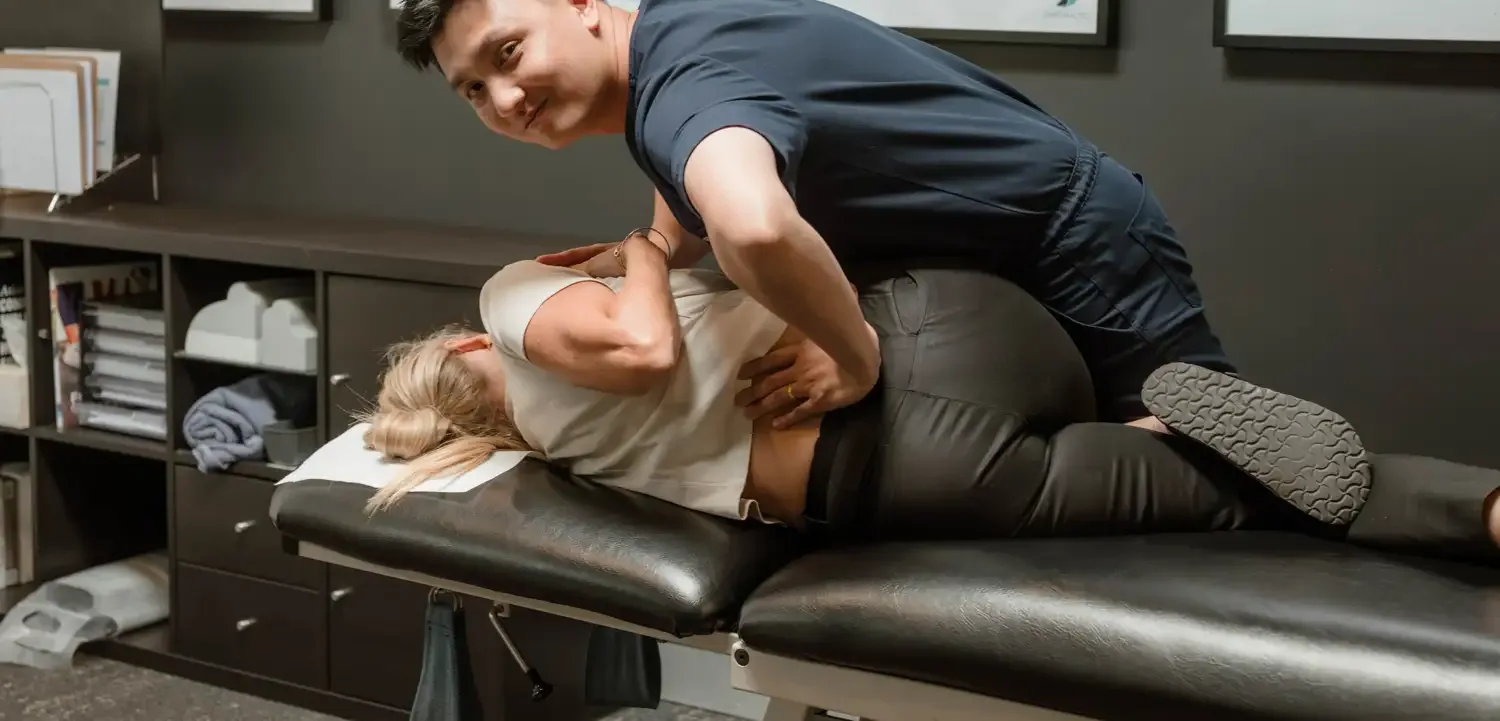
Short answer: Most people feel lighter and looser after an adjustment. When side effects do happen, the most common of chiropractic treatment are mild soreness or stiffness where you were adjusted, a headache, or feeling tired. They usually start within hours and settle within a day or two. A 2026 study of 862,000+ adults found no added risk of neck artery tear. And despite what you may read online, adjustments don't release "toxins".
Common side effects of chiropractic
Many people feel nothing unusual after an adjustment, or simply feel looser. Others notice some short-lived after-effects, particularly after their first few visits. The common ones are:
- Local soreness or stiffness. An ache in the area that was adjusted, a bit like the feeling after a new workout.
- Muscle tenderness. Muscles around the joint may feel tender to touch.
- Headache. Some people notice a mild headache, more often after neck work.
- Tiredness. Feeling a little flat or sleepy later that day.
- A brief flare of your usual pain. Your familiar symptoms may feel slightly worse before they settle.
These effects are generally mild, start within hours of the visit, and ease within a day or two. They tend to become less common as your body gets used to care.
Why you might feel sore after a chiropractor
An adjustment moves joints that may have been stiff or guarded for some time. The muscles, ligaments and joint capsules around them can react, much like your legs do after the first run in months. Your nervous system is also adapting to movement it hasn't had for a while.
That nervous system side is real and measurable. An adjustment sends a burst of sensory input from the deep tissues around the joint to your brain. In studies, a single session has been followed by changes in how the brain processes information from the body and in its signal to muscles1,2. We explain the research in chiropractic and your nervous system.
Soreness doesn't mean something has been damaged, and it doesn't mean the care is "working" either. It's simply a common, temporary response. If you're getting low back pain after an adjustment, our article on lower back pain feeling worse after an adjustment goes into more detail.
What toxins are released after a chiropractic adjustment?
None. You may have read that adjustments "release toxins" that make you feel unwell, tired or achy, and that you need to drink extra water to "flush them out". There is no good evidence for this. An adjustment moves a joint; it doesn't free stored toxins into your bloodstream.
If you feel tired, achy or a bit off after a visit, the usual explanation is ordinary soreness, muscle tension settling, or simply that you've had a busy day and lay still on a table for a while. Drinking water is always sensible, but not because of toxins. We'd rather give you an honest answer than a comforting myth.
What about serious side effects?
The serious side effect people ask about most is a tear in a neck artery after a neck adjustment. A large study published in September 2026 in the journal Chiropractic & Manual Therapies, led by researchers at University Hospitals Cleveland Medical Center with Case Western Reserve University, Cleveland Clinic and Duke University, compared more than 431,000 adults who had chiropractic neck manipulation with more than 431,000 matched adults who were prescribed ibuprofen instead. It found no evidence of an increased risk of cervical artery dissection, a rare tear in a neck artery, after chiropractic neck care. Within 30 days there were 31 cases in the chiropractic group and 58 in the ibuprofen group (read the study summary from University Hospitals).
A careful check still matters. It's one of the main reasons a careful history and a thorough neurological and orthopaedic check should come before any adjustment. It's also why you should always tell your chiropractor about recent injuries, new or unusual symptoms, and any health conditions or medications, even if they seem unrelated.
Warning signs after a chiropractor: what's normal and what isn't
| Usually normal | Call us to talk it through |
|---|---|
| Mild ache or stiffness where you were adjusted | Pain that's clearly worse than before, rather than just sore |
| Feeling tired that afternoon or evening | Soreness that isn't easing after a couple of days |
| A mild headache that eases | Any new symptom you didn't have before the visit |
| A short flare of your usual symptoms | Anything at all that worries you |
If anything after your visit concerns you, call the clinic on 03 9787 8518 and talk to us. We'd much rather hear from you than have you sit at home wondering. That's what we're here for.
How to ease soreness after an adjustment
- Keep moving gently. A walk usually helps more than lying still.
- Heat or ice. Use whichever feels better for 15–20 minutes at a time. See our guide to ice for back pain.
- Go easy on heavy loads for the rest of the day: big gym sessions, heavy lifting or long drives.
- Do your home exercises as shown, and ease off any that sharply increase pain.
- Follow your aftercare advice. Our care instructions cover the basics.
How we approach this at MPCC
Safety starts before anyone touches your spine. Your new patient appointment (30–40 minutes) includes your health history, posture pictures and a thorough chiropractic, orthopaedic and neurological check. If your history and check point to X-rays, we'll refer you, and the imaging clinic we refer to bulk bills X-rays our chiropractors request.
Whether you're adjusted on the first visit is up to the clinical judgement of your chiropractor; often more testing comes first. At your report of findings appointment, we explain what we found in plain English, what care would involve, and what you might feel afterwards. Tell us what worries you, and we'll talk it through. Nothing happens without your agreement.
References (2)
- Lelic D, et al. (2016). Sensorimotor integration in the prefrontal cortex after spinal manipulation. Neural Plast. doi:10.1155/2016/3704964
- Haavik H, et al. (2016). Cortical drive to upper and lower limb muscles after spinal manipulation. Brain Sci. doi:10.3390/brainsci7010002